Project Goals
The Hub is designed to achieve three primary goals.
-
Reveal New, Actionable Knowledge
Develop and disseminate rigorous evidence about the lived experiences of low-income STEM students, particularly their interactions with publicly funded housing, health, and human services and how those supports relate to STEM participation, retention, and completion.
-
Build Cross-Sector Collaboration
Engage diverse stakeholders—including education, workforce, housing, health, and human services partners—to conduct collaborative research and demonstrate what is possible when systems align to support student success.
-
Model Scalable Approaches
Document and share methods that other states, institutions, and federal initiatives can replicate using increasingly available integrated data systems, strengthening equitable STEM pathways nationwide.
Project Activities
The Hub meets these goals through two large-scale research studies.
Research Study 1
S-STEM-NET Hub partners are working to link individual-record data from the Washington State Education Research and Data Center (home to a statewide longitudinal data system connecting the early learning, K–12, postsecondary, and workforce sectors) and the Washington State Department of Social and Health Services (the state agency that delivers various social services and public benefits programs). Using linked data, this study will seek to better understand who accesses need-based financial aid and publicly funded benefits programs and how these programs support low-income students to access and succeed in STEM postsecondary and workforce pathways.
Research Study 2
The Hub is partnering with two Washington community and technical colleges on an experimental study to investigate whether providing multimodal outreach and evidence-based messaging that encourages use of campus basic needs support, financial aid, and public benefits leads to greater use of those supports and academic outcomes overall and in STEM fields. The pre-registered scientific plan can be found at Open Science Framework.
To prepare for the study, we partnered with the Washington Student Achievement Council (WSAC) to learn lessons from their Public Benefits Promotion Pilot program. WSAC is the state agency that leads strategic planning, oversight, and advocacy of public postsecondary institutions and administers state financial aid and college access programs. To develop the intervention for the experimental study, we collected data on how institutions implemented targeted outreach during the pilot, the challenges practitioners experienced, and how students responded to varied messaging and outreach.
Based on pilot findings, we developed a toolkit for enhancing outreach to increase college students’ use of basic needs services and a brief about lessons learned, which are available on the WSAC website.
Publications from the pilot
Why Washington State?
The Hub is based in Washington state, which offers a uniquely strong context for this work:
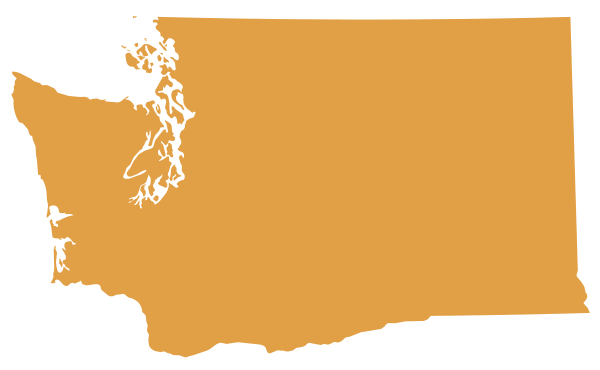
- A nationally recognized integrated data system linking K–12 education, higher education, employment, housing, health, and human services
- 19 active S-STEM programs across public colleges and universities
- One of the highest concentrations of STEM jobs in the United States
By grounding the work in Washington, the Hub can efficiently generate insights with relevance far beyond the state.